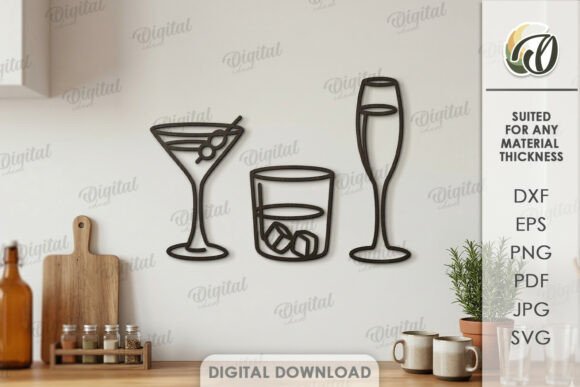
Kitchen Line Art Decor Laser Cut: Transforming Digital Files Into Real-World Style
There is a distinct satisfaction in walking into a kitchen that feels curated rather than just functional. For many of us, the kitchen is the heart of the home, but it is also one of the hardest rooms to decorate without cluttering valuable counter space or breaking the bank on custom carpentry. This is where Kitchen Line Art Decor Laser Cut designs have become an indispensable resource for creators, homeowners, and small business owners alike. However, before you dive into your next project, it is crucial to understand exactly what you are buying. Please pay attention: this is a digital product. No physical goods will be sent. The photos you see online are intended only for inspiration, showcasing what is possible when you take these files and bring them to life with your own tools.
When you purchase this item, you receive a zip folder containing one design in multiple versatile formats: SVG, DXF, EPS, PDF, JPEG, and PNG. This variety ensures that whether you are a hobbyist with a desktop cutting machine or a professional running industrial equipment, you have the right file for the job. But beyond the technical specifications, the real value lies in how these simple, elegant lines can transform a space or a product line.
Bridging the Gap Between Digital Files and Physical Decor
The concept of line art is deceptively simple. It relies on minimalism, using clean strokes to define shapes—perhaps a steaming coffee cup, a whisk, a chef’s hat, or a stylized fruit basket. When applied to laser cutting, this simplicity is a strength. Complex gradients and shadows do not translate well to materials like wood, acrylic, or metal. Line art, however, cuts cleanly and looks sophisticated from a distance and up close.
For the everyday user, understanding this distinction is key. You are not buying a poster; you are buying the blueprint for a piece of decor. This shift in mindset opens up endless possibilities. You are no longer limited to what a manufacturer decided to produce in bulk. Instead, you become the producer. You choose the material. You choose the finish. You choose the size. This level of control is why digital assets like Kitchen Line Art Decor Laser Cut files have surged in popularity among DIY enthusiasts and interior design bloggers.
Real-World Applications for Homeowners and Renters
Consider the renter who wants to personalize their space without drilling holes or painting walls. A laser-cut line art piece made from lightweight plywood or acrylic can be hung using removable adhesive strips. It adds texture and visual interest to a blank backsplash or an empty wall above the dining table. Because the design is monochromatic and linear, it fits seamlessly into various aesthetics, from modern farmhouse to industrial chic.
For homeowners, these designs offer a way to unify disparate elements. If you have mixed metals in your hardware or a clash of cabinet styles, a consistent decorative motif can tie the room together. Imagine a set of three line art pieces—one featuring herbs, one with utensils, and one with cookware—arranged in a gallery wall format. The result is a cohesive look that feels high-end but was created for a fraction of the cost of commissioned art.
Commercial Opportunities for Makers and Entrepreneurs
If you run a small business, particularly on platforms like Etsy or at local craft fairs, this digital asset is a foundational tool for inventory creation. The market for personalized home goods is robust, but competition is fierce. Success often comes down to speed and versatility. Having a high-quality Kitchen Line Art Decor Laser Cut file in your library allows you to rapidly prototype new products.
You might use the SVG file to cut intricate coasters from slate or cork. The DXF format could be used to create metal wall hangings for a more rugged, industrial appeal. The PNG and JPEG files are perfect for creating mockups for your online store or for printing on aprons and tea towels if you also offer textile products. By purchasing one design in multiple formats, you eliminate the need to hire a graphic designer for every new product variation. This efficiency directly impacts your bottom line, allowing you to test markets with lower upfront investment.
Furthermore, these designs are excellent for customization. A local café might commission you to create a branded sign using their logo integrated with kitchen-themed line art. Or, a real estate agent might want a closing gift for a client who just bought a new home—a custom wooden sign with the family name and a subtle kitchen motif. The flexibility of the EPS and PDF formats makes editing these additions straightforward for anyone with basic vector software skills.
Educational and Community Uses
Beyond personal and commercial use, these files have a place in educational settings. Vocational schools teaching CNC machining, laser cutting, or graphic design can use these files as practical exercises. Students learn how to prepare files for different machines, understanding the importance of vector paths versus raster images. The simplicity of line art makes it an ideal starting point for beginners learning to operate laser cutters, as it minimizes the risk of material waste due to cutting errors.
Community centers and makerspaces also benefit from shared resources. A single purchase of a high-quality design can be used by multiple members for workshops, fostering a sense of community and shared creativity. It lowers the barrier to entry for participants who may not have their own design skills but want to experience the joy of making something tangible.
What to Consider Before You Download and Cut
While the possibilities are endless, successful execution requires some planning. First, consider your material. Line art looks dramatically different on dark walnut wood compared to bright white acrylic. The contrast and texture of the material will define the final aesthetic. If you are cutting thin materials, you may need to add a backing board to provide stability and prevent warping over time.
Second, think about scale. A design that looks balanced on a computer screen might appear too sparse or too cluttered when enlarged to three feet wide. Always do a test cut on a scrap piece of your chosen material. This step saves time and money in the long run. Check the kerf—the width of the cut made by the laser—to ensure that delicate parts of the line art do not fall apart or become too fragile.
Finally, remember the licensing terms. Most digital downloads for personal and small commercial use allow you to sell physical items made from the files, but they rarely allow you to resell the digital files themselves. Respecting these boundaries ensures that designers continue to create high-quality resources for the community. If you have specific questions about usage rights or file compatibility, please write me a message. I am here to help clarify any doubts before you proceed.
Making the Most of Your Purchase
The beauty of acquiring a Kitchen Line Art Decor Laser Cut package is the immediate access it provides to professional-grade design. You do not need to wait for shipping. You do not need to worry about damaged goods in transit. Once the download is complete, the timeline is yours. You can create a gift for a friend tonight, stock up on inventory for a holiday market next month, or simply experiment with new finishes this weekend.
This digital approach aligns with a sustainable mindset as well. You produce only what you need, reducing waste associated with mass-produced decor that often ends up in landfills. You choose durable materials that last, and you create pieces with personal meaning or specific utility.
Whether you are a freelancer looking to expand your service offerings, a blogger seeking unique content for a home renovation post, or a parent wanting to add a personal touch to a family kitchen, this tool empowers you to create. The zip folder with its array of file formats is not just a collection of data; it is a key to unlocking your creative potential. Happy shopping, and even happier creating.